

Mung Bean Soup
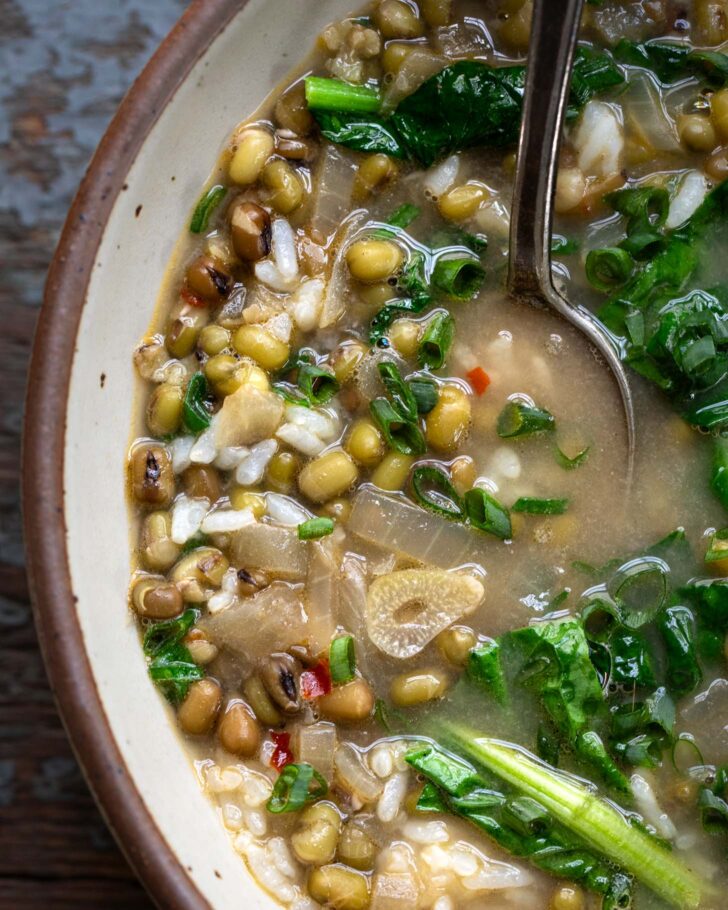
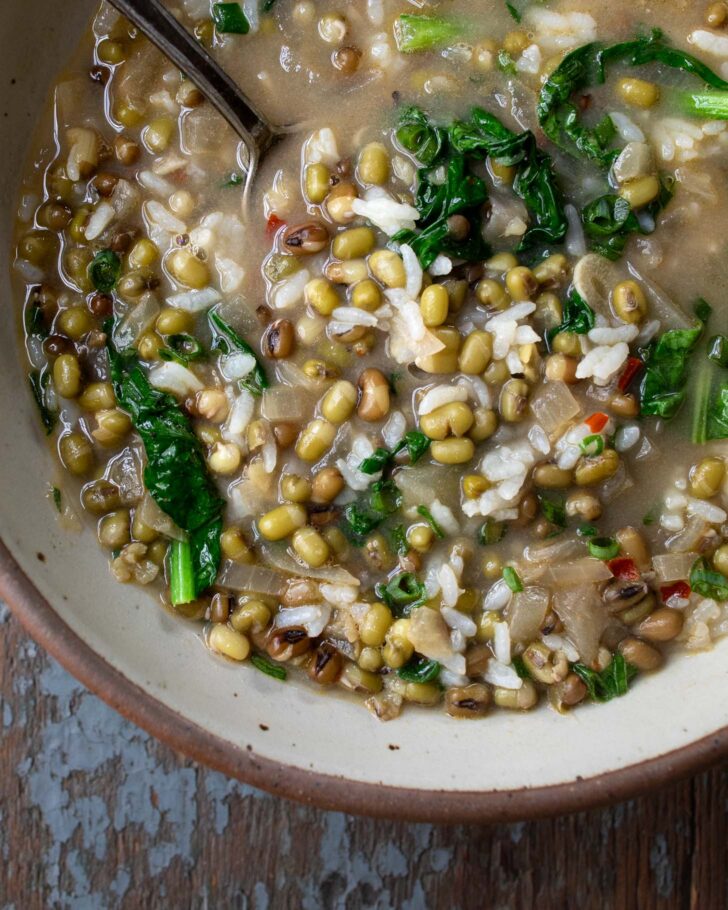
I adore the earthy flavor and hearty texture of mung beans. This soup is a celebration of that! Not only is this mung bean soup wholesome and satisfying, but it couldn’t be easier. To build the flavorful broth, you use humble ingredients like onions, garlic, red pepper flakes, and black pepper. All of this combined with cooked mung beans, along with their cooking liquid, and a splash of tamari and rice vinegar, creates a savory, well-rounded flavor. To add texture, you mix in some chewy botan rice with the hot broth, as well as freshly torn totsoi, offering some added minerals to this elegant and grounding soup.
When it comes to a simple recipe like this mung bean soup, it is important to use the best ingredients. Mung beans are an incredible ingredient, as they are rich in vitamins, minerals, and protein! I intentionally left out additional spices for this recipe because I wanted the mung beans to shine. Bonus points: not only is this soup completely gluten free, it is also nut free, soy free, low in oil, and, of course, totally vegan.
SOAKING AND COOKING THE MUNG BEANS
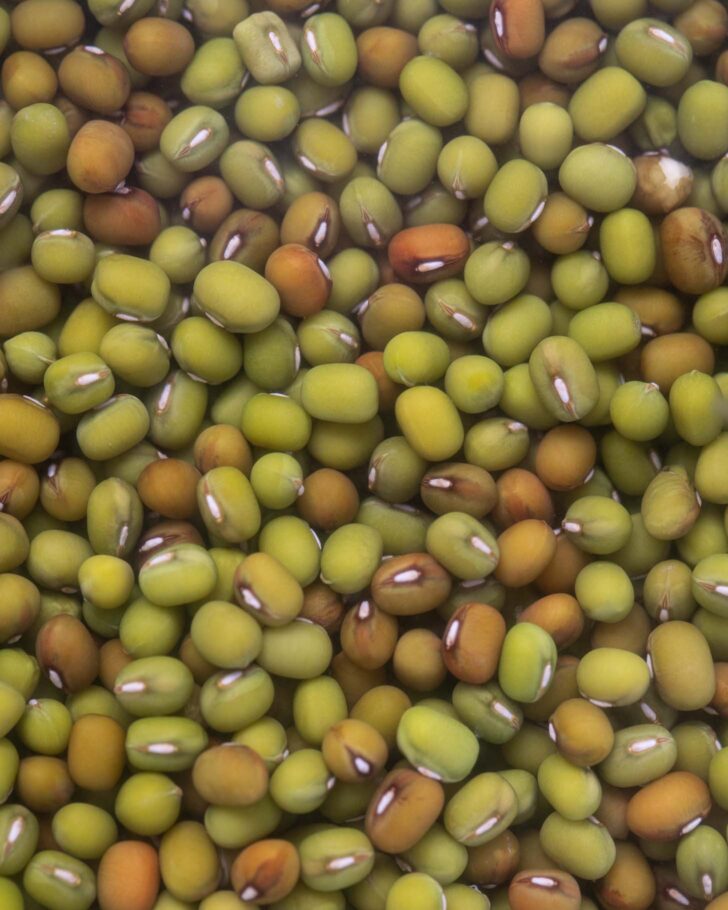
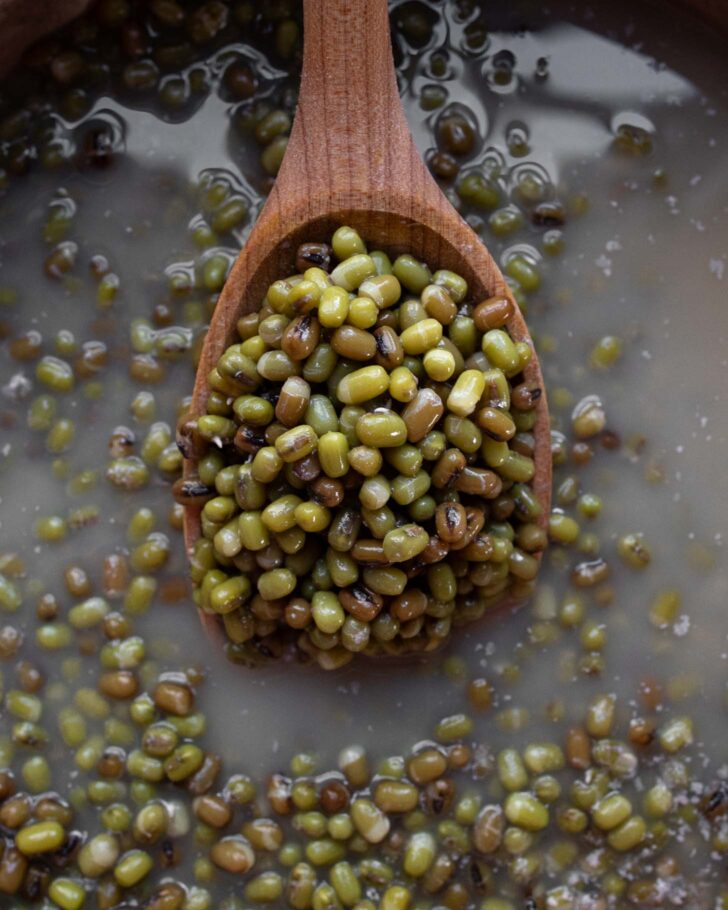
This mung bean soup recipe uses whole, dried mung beans. (Not split mung beans that have their green skins removed!). The best practice for cooking any whole dried bean is to soak them overnight. This gives them plenty of time to absorb water and become nice and plump and will allow them to cook quickly and evenly, while also making them easier to digest.
One important step to remember about this mung bean soup is that part of the broth is the cooking liquid from the mung beans, which has a lovely depth of flavor. The cooked beans, along with this cooking liquid, are added to a larger pot that has sautéed onions, garlic, red pepper flakes, and freshly cracked black pepper. You can’t get easier than that, friends.
FINAL SEASONINGS
Once the onions, garlic, and spices are combined with the cooked mung beans and their liquid, and any additional water, everything is brought to a boil. Once the heat is reduced, it is time to add the final seasonings: rice vinegar and tamari. I would start off with a splash of each and mix well. Then give it a taste. Add more of each until the mung bean soup is seasoned to your liking! Then you are ready to serve.
ADDING FRESH GREENS
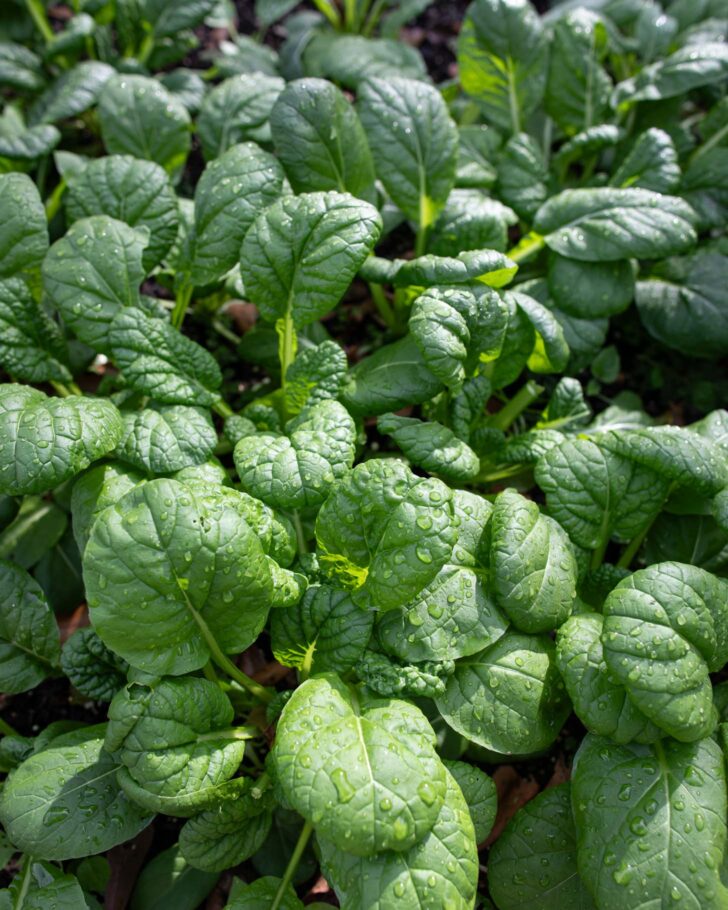
If you are familiar with my soup recipes, you probably already know that I love adding fresh greens towards the very end of cooking. This lightly cooks the greens, helping to keep them more nutritious while also making them more tender. For this mung bean soup, I think tatsoi is the perfect green, as it pairs gorgeously with the mung beans and rice. (I also have a whole raised bed full of it in the garden!) That said, most greens will work here, including spinach, kale, or even arugula. Use what you have and bonus points if you can harvest them straight from the garden.
SERVING THE MUNG BEAN SOUP
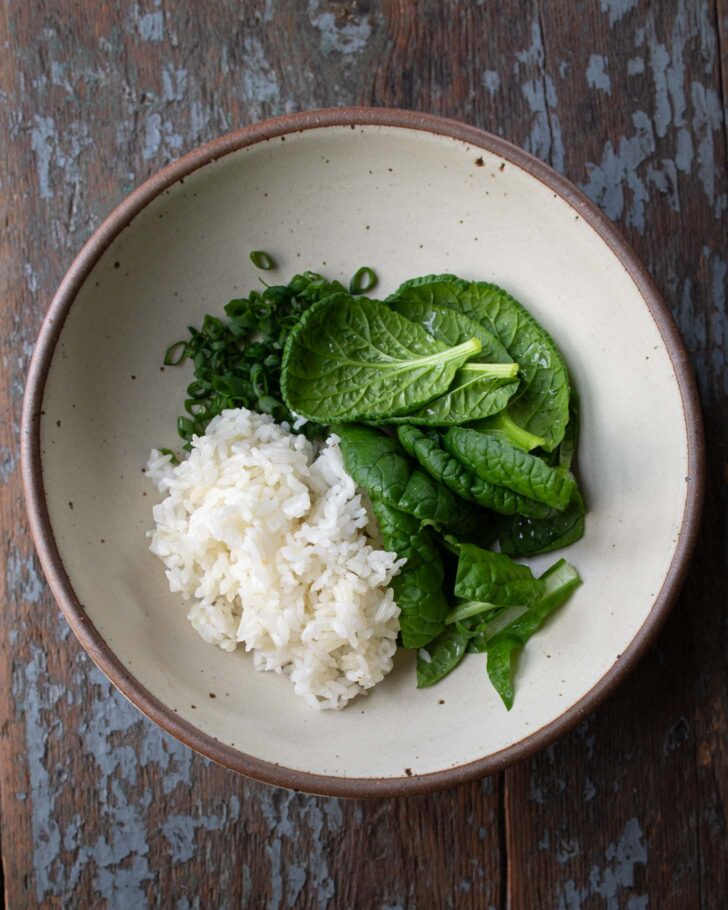
When the soup is ready, all you have to do is add the remaining ingredients to each serving bowl and ladle in the hot mung bean soup. The heat from the soup will break up the rice and also wilt the greens and slightly cook the scallions.
The rice I like using for this is Calrose Botan (linked below). To make this recipe even lower in oil, you can pull back on how much is used when baking the rice. (You can actually make the Easy Baked Rice recipe with no oil, if you’d prefer.) One more thing to mention, this variety needs 35 minutes to bake in a 450°F oven. Keep that in mind when following the baked rice recipe.
THICKER VARIATION FOR SERVING
If you store leftovers in the fridge for this mung bean soup, you will notice that it thickens up quite a bit. You can use this to your advantage and make a serving of the soup that is more thick and hearty. Simply heat the leftover soup and rice together in a skillet and throw in your desired greens. Cook over medium heat, stirring often, until everything is piping hot. This will result in a texture more similar to rice and beans, rather than a soup. To loosen, simply add some water and season with more tamari, to taste.
SHOP FOR THIS MUNG BEAN SOUP
Here are some of my favorite ingredients and items from my Amazon Storefront that you can use for this recipe. If you click these affiliate links and make a purchase, I will make a very small commission. This is no extra charge to you! This will help to support my business and allow me to continue sharing recipes, so thank you in advance:
Organic Whole Mung Beans– These mighty beans are incredibly nutritious and packed with protein. This particular brand is organically grown in Canada, which I love.
Pepper Mill– Freshly cracked black pepper is an important part of this soup and when I say freshly cracked, I mean it! This makes all the difference in flavor. I have this very same pepper mill and have been using it for years. Highly recommend!
Organic Peppercorns– As I mentioned above, fresh peppercorns are the secret to delicious recipes, in my humble opinion. These are the exact ones I like to order in bulk. Keep them in a tightly-sealed jar away from light and fill up your pepper grinder whenever it is running low.
Calrose Botan Rice– This is one of my favorite varieties of rice. It has a delightfully chewy texture and fantastic bite. It is lovely on its own or mixed in with soup. Heads up! This link is for a 15-pound bag but if you would like to try a smaller amount, you can find it at most well-stocked grocery stores.
ENJOY THIS MUNG BEAN SOUP!
I hope that y’all love this simple mung bean soup recipe. I created it on a cold January day and it really hit the spot. My hope is that it does the same for you! If you do make it, please let me know in the comments below. Happy cooking friends.
-Timothy
IF YOU LIKE THIS RECIPE, TRY THESE:

Mung Bean Soup
Ingredients
- 1 pound whole dried mung beans, plus water to soak and cook
- 2 tablespoons olive oil
- 1 large onion, diced
- Pinch sea salt
- 4 fat garlic cloves, thinly sliced
- ½ teaspoon red pepper flakes
- ½ teaspoon freshly cracked black pepper
- 1 tablespoon rice vinegar
- Tamari, to taste
- 1 bunch fresh tatsoi, or any leafy green such as spinach or kale
- 1 bunch scallions, thinly sliced
Instructions
- Soak the mung beans: Place the mung beans in a medium bowl and cover with a few inches of water. Leave on the counter for at least 8 hours until fully soaked and plump. Drain and rinse well. Set aside.
- Cook the mung beans: In a medium pot, add the drained mung beans and cover with about 2 inches of water. Add a big pinch of salt and mix well. Place over high heat and cook, uncovered, until at a boil. Scrape off any white foam that appears and continue to cook until the beans are tender. (This should take around 20 minutes but give them a taste to see. You want them to be tender while still holding their shape.) Once done, turn off the heat and set aside.
- Bake the rice: While the mung beans are cooking, follow the instructions for my Easy Baked Rice to make one batch using Calrose Botan Rice as the variety. The total bake time will be 35 minutes. Once done, set aside until ready to serve.
- Cook the onions and garlic: Place a large pot over medium-high heat and drizzle in the oil. Once hot, add the onions plus a pinch of salt. Mix well and cook for 10 minutes, stirring every so often, until soft and tender. Then add the garlic, red pepper flakes, and black pepper. Mix well and cook for about 5 minutes, stirring often, until the garlic is soft and fragrant.
- Add the mung beans: Transfer the cooked mung beans with the cooking liquid into the large pot of cooked onions and garlic. Depending on how much cooking liquid there is, you may need to add some more water to get the right consistency. You want it to be a hearty, brothy soup but not too liquidy. Find a balance that feels good to you by adding an additional cup of water at a time.
- Bring to a boil and season: Once everything is combined, place over high heat and bring to a boil. Once at a boil, reduce the heat to low and add the vinegar and a splash of tamari. Give the soup a taste and add more of each, if desired.
- Serve the soup: Once the soup is seasoned to your liking, grab a handful of desired greens. If they are larger pieces, roughly tear them. Add them directly to a bowl. Then add a scoop of cooked rice and a big pinch of sliced green onions. Pour the hot soup over everything and mix. Enjoy immediately!